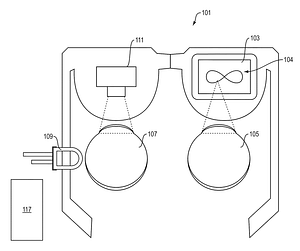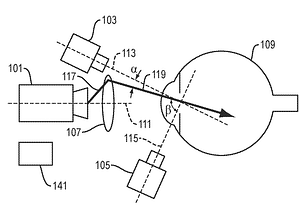
Methods and apparatus for anterior segment ocular imaging
ABSTRACT: A projector and one or more optical components project a light pattern that scans at least a portion of an anterior segment of an
ABSTRACT: A projector and one or more optical components project a light pattern that scans at least a portion of an anterior segment of an
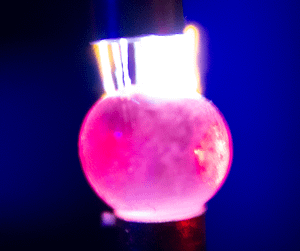
Spherical tissue deformation in electrostatic fields (NaCL+H20 suspension in hydrogel structure)
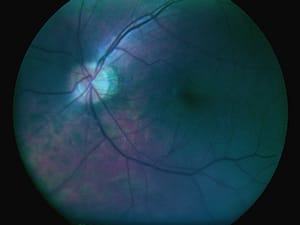
Neurovascular imaging interface, implementing coincident imaging/illumination path and through-pupil illumination.
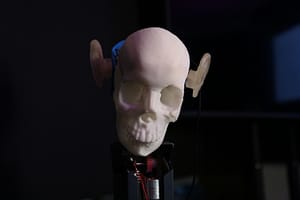
Biomimetic systems architecture engineering: prototypes Quantizing visual perception as an expression of experience is referentially viewed as a modular function, temporally sequenced within multiple sensory
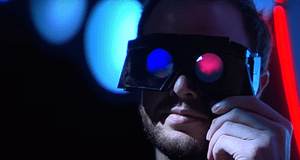
This self-directed, interactive device captures and visualizes images of the retina without the need for complex optics and precise alignment of illumination pathways.
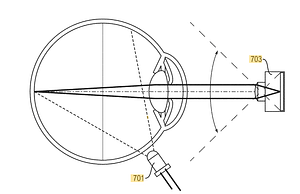
Indirect, diffuse illumination may be employed, rather than direct illumination of the retina through the pupil. For indirect illumination, a cool-to-the-touch light source is pressed
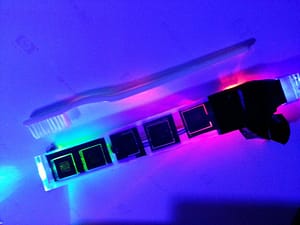
This research investigates the viability of subsurface imaging of the teeth and gums as a possible metric for quantifying blood flow, oxygen levels, bone density,
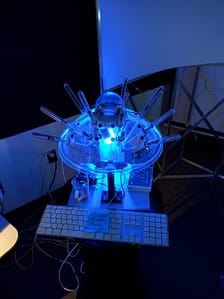
Publications pending Please log in to view protected content:
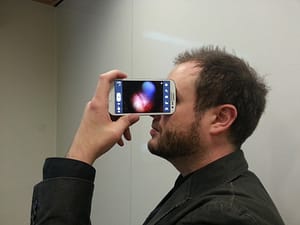
Non-mydriatic fundus imaging on smart phone platforms may prove to be a paradigm shift in rapid screening devices with no operational expertise required
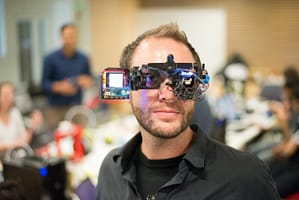
This system expands upon prior work by fully integrating the self-alignment architecture within the portable user interface.
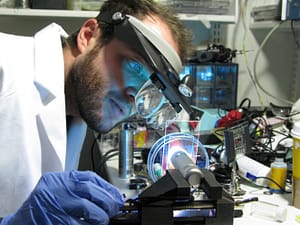
A cataract-affected eye scatters and refracts light before it reaches the retina, caused by a fogging or clouding of the lens. This system measures this
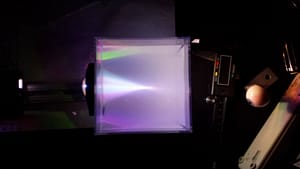
A low-cost, wearable solid-state device with no moving optical parts is articulated to create a full, 3D reconstruction of the anterior segment of the eye.
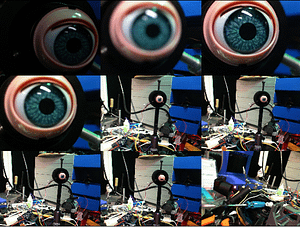
Building animatronic substrates for calibration and testing of bionic interfaces.
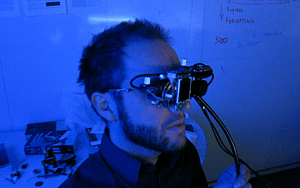
This invention comprises an apparatus for retinal self-imaging. Visual stimuli help the user self-align their eye with a camera. Bi-ocular coupling induces the test eye to rotate into different positions.